By Donna Meyer, Content Specialist - Onecklace
Published August 25, 2026
Cancer is the fourth sign of the zodiac and the only one ruled by the Moon. Every other sign answers to a planet that keeps the same face year after year. Cancer answers to a body that changes shape nightly and drags the ocean around while it does it.
The symbol is a crab, and most descriptions stop at hard shell, soft inside. The more useful fact is that the shell does not grow with the animal. To get bigger it must abandon the shell entirely and sit unprotected until a new one hardens. Cancers do this too, and they do not enjoy the middle part.
Cancer runs from June 21 to July 22. If your birthday sits on either edge, the boundary can move by a day depending on the year and your birth time, the sun does not cross into a new sign at the same moment annually. Cancer begins at the solstice, which is why its start date wobbles.
People born near an edge often see themselves in both signs, and there is a real reason: the planets either side of your sun often sit in the neighbouring one.
The Moon governs memory, habit, instinct and mood, everything below the level of decision. Cancer is the only sign it rules, so Cancers live on that layer more than anyone. They remember the tone of a conversation years after everyone else forgot it happened. They read a room in four seconds. And their mood turns on a cycle with little relation to what is going on, which is why asking a Cancer what is wrong produces an honest, useless shrug.
The surprise is the modality. Cancer is cardinal: a sign that starts things, like Aries and Capricorn. People expect the crab to be passive. It is not. Cancer initiates constantly, it just initiates sideways: rather than announce a takeover, it makes itself indispensable. Water plus cardinal is not weakness. It is force applied through care.
Watchful, funny in a deadpan register, far more guarded than the warmth suggests. The Cancer man reads as easygoing for months before anyone notices how little he has disclosed. He asks the questions. He does not answer many.
He trusts slowly and then completely, which makes betrayal disproportionately expensive with him. He is also, contrary to the stereotype, often the most driven person in the room; the provider instinct runs deep and reads as ambition. Push him for feelings on your schedule and he goes quiet.
Perceptive, hard to fool, running an assessment of you she is unlikely to share. She notices the gap between what people say and how they say it, and rarely argues, she quietly revises her expectations downward. This gets called intuition. It is closer to sustained attention.
She builds the environment everyone else wants to be in, which becomes a problem when nobody thanks her for it. She is not fragile; she is absorbent. She takes on the moods around her, and a chaotic partner exhausts her before he notices anything is wrong.
Cancer is not looking for excitement. Cancer is looking for somewhere to put down roots, and assesses new people against that standard immediately, not consciously, and not always fairly. This is the sign most likely to know by the third date and least likely to say so.
What they need is consistency, a duller requirement than most signs have and much harder to fake. Turning up when you said you would, over years, does more than any grand gesture. The failure mode is worth naming: an insecure Cancer does not ask for reassurance, they test for it, and the tests escalate. The answer is not to pass the test. It is to make it unnecessary.
Cancer is the colleague who knows what is actually happening in the organisation. Not the org chart, the real thing: who is unhappy, which partnership is failing, which announcement is a fortnight away. That is pattern recognition applied to people, and in the right role it beats any technical skill.
They lead by becoming the person everyone comes to, which is effective and quietly total. The weakness is confrontation: a Cancer manager avoids the difficult conversation until the situation calcifies, then handles it more harshly than if they had spoken in week one. They also stay too long in jobs that stopped deserving them, because leaving feels like abandonment.
Fields that suit them: healthcare, teaching, hospitality, property, family business, counselling, HR, museum and archive work, anything built on trust held over a long period.
Cancer is the faintest of the twelve zodiac constellations, a strange fate for a sign so heavily written about. No bright anchor star, no obvious shape. You find it by locating Gemini and Leo and looking between them.
The brightest star is Al Tarf (Beta Cancri), an orange giant of magnitude 3.5, its name from the Arabic for the end, the tip of the crab's leg. Unusually, the alpha star Acubens is fainter. Alpha normally goes to the brightest, so Cancer is one of the sky's filing errors.
Its real prize is the Beehive Cluster, Praesepe or M44: one of the nearest open star clusters to Earth and visible to the naked eye, a faint smudge that resolves into dozens of stars through binoculars. Ancient observers used it as a weather gauge: if the Beehive vanished, rain was coming. Best viewed from the northern hemisphere in late winter and spring, high overhead.
Ask three sources for the Cancer birthstone and you get three answers, because they are answering different questions. Ruby is the traditional zodiac stone, from a system that assigned stones by sign rather than by month. Moonstone is the astrological stone, for the obvious reason: it belongs to the Moon, and the Moon rules Cancer alone. Pearl is the modern June birthstone and ruby the modern July one, so a Cancer's month stone depends on which half of the sign they fall in. All three are correct inside their own tradition.
If you want the stone that genuinely suits the sign, it is moonstone. The adularescence, that floating blue-white light moving across the surface as you tilt it, is the closest a mineral gets to moonlight, and it does what Cancer does: plain from one angle, lit from within from another. Pearl is the runner-up, on thematic rather than mystical grounds. It is the only gem grown by a living animal, formed as a protective response to an irritant, inside a shell.
Ruby is the outlier, and the one to reach for when the softness needs a counterweight; Cancer is a cardinal sign, and a red stone says so. The colours are white, silver and sea green, all lunar or tidal. Silver is the Moon's metal and the kinder setting for moonstone and pearl. If you cannot decide, silver with moonstone is the safe answer and ruby in silver the interesting one.
An unusually emotional list for a sign people call passive, almost every name built a career on making strangers feel something, most while guarding their own privacy.
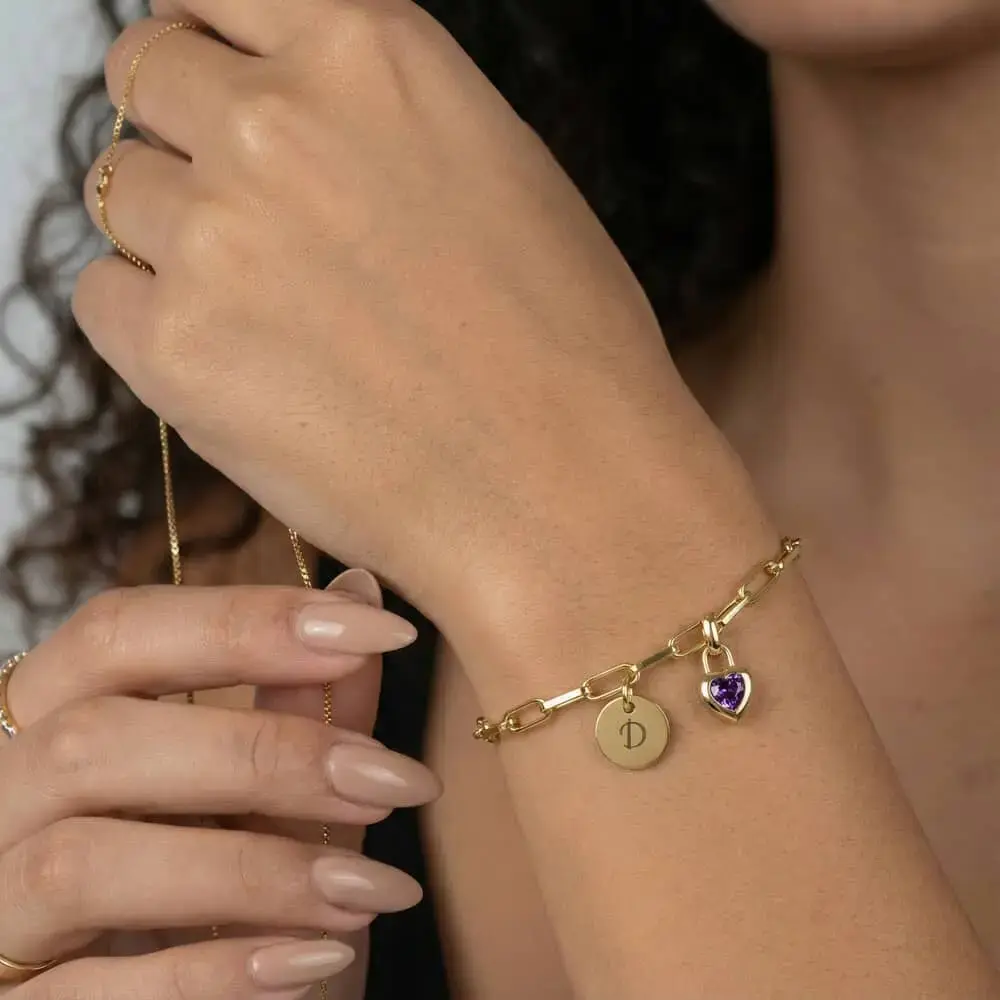
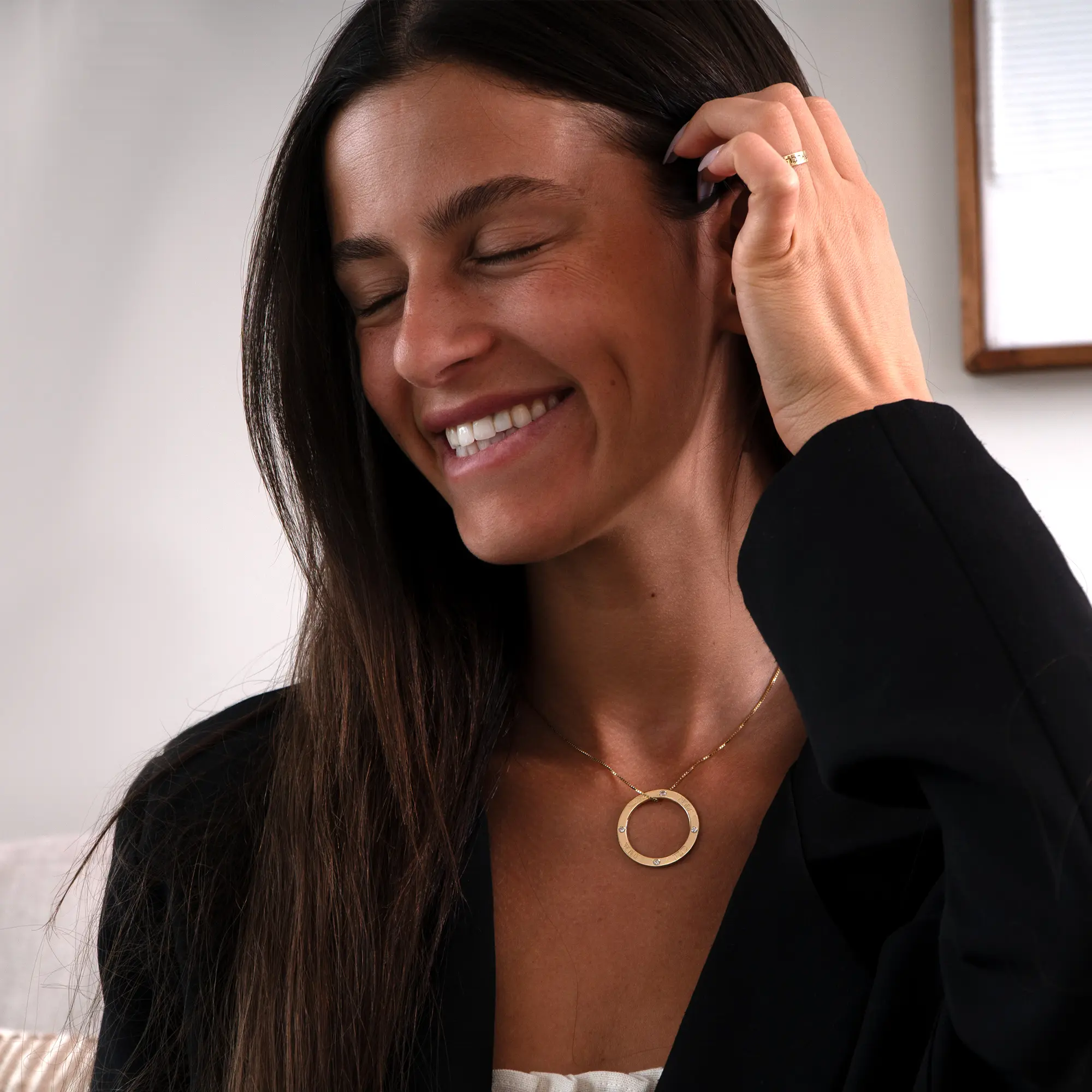
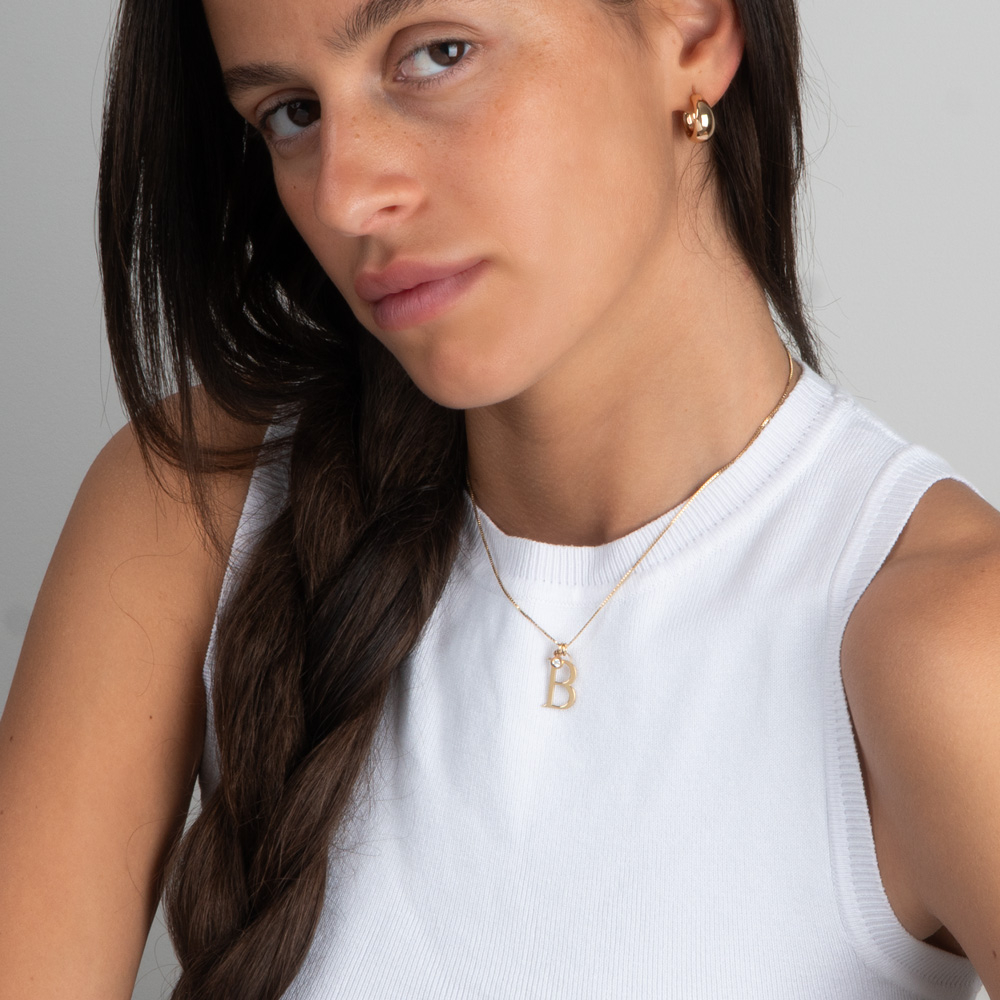
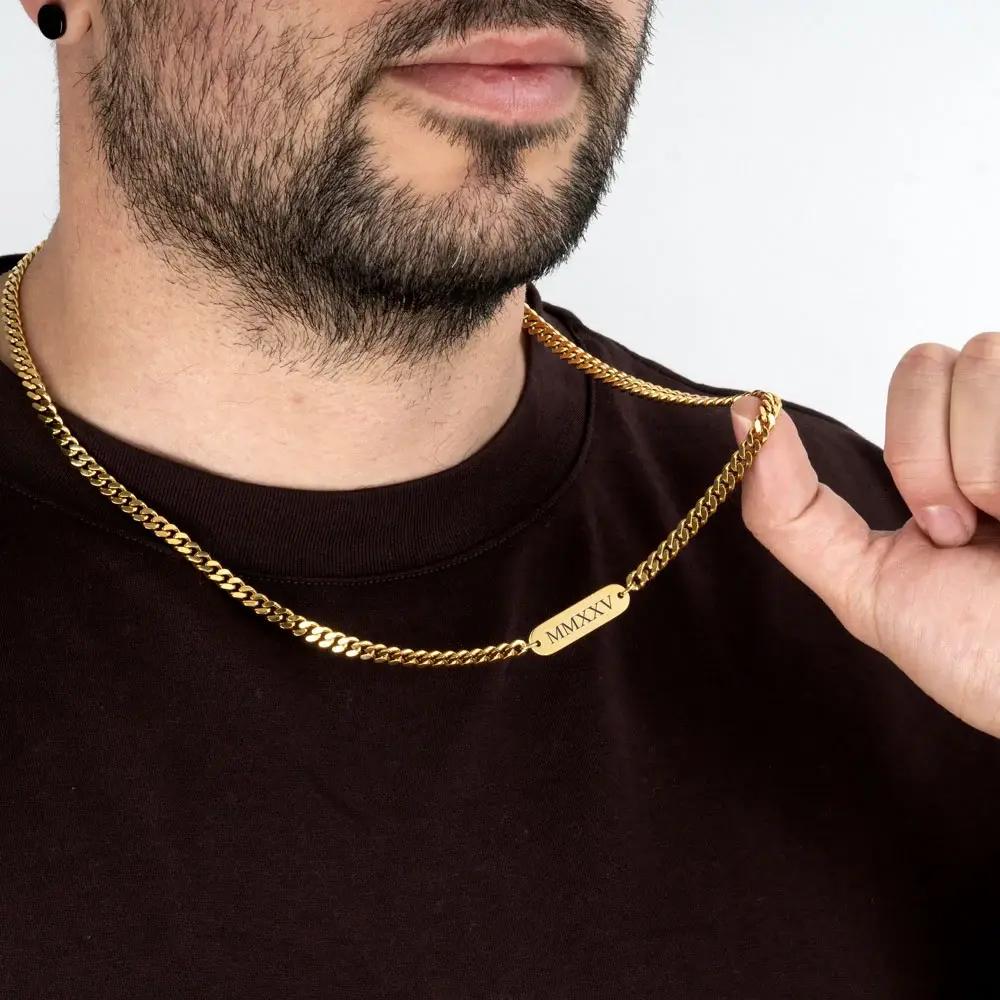
If you are buying for a Cancer, or you are one, the crab glyph, two spirals facing away from each other, makes a cleaner pendant than the animal itself, and moonstone in silver is close to purpose-built for this sign. See our zodiac necklace collection for the sign as a constellation, a glyph and an engraved charm.
For the full picture of how Cancer fits alongside the other eleven, read our guide to the 12 zodiac signs.
Cancer covers birthdays from June 21 to July 22. The exact start and end can shift by a day depending on the year.
Cancer is a water sign, and its ruling planet is the Moon.
Cancer is known for being nurturing, loyal, intuitive and deeply devoted to home and family.
Astrologically, Cancer is usually most compatible with Taurus, Virgo, Scorpio and Pisces.
A personalized piece that reflects their sign, such as a Cancer zodiac necklace or constellation jewelry engraved with their name, makes a meaningful birthday gift.
About the author
Content Specialist - Onecklace
Donna Meyer is a content specialist at Onecklace. For the past 9 years she has written about our personalized jewelry, sharing gift ideas, styling tips and the stories behind our designs.